
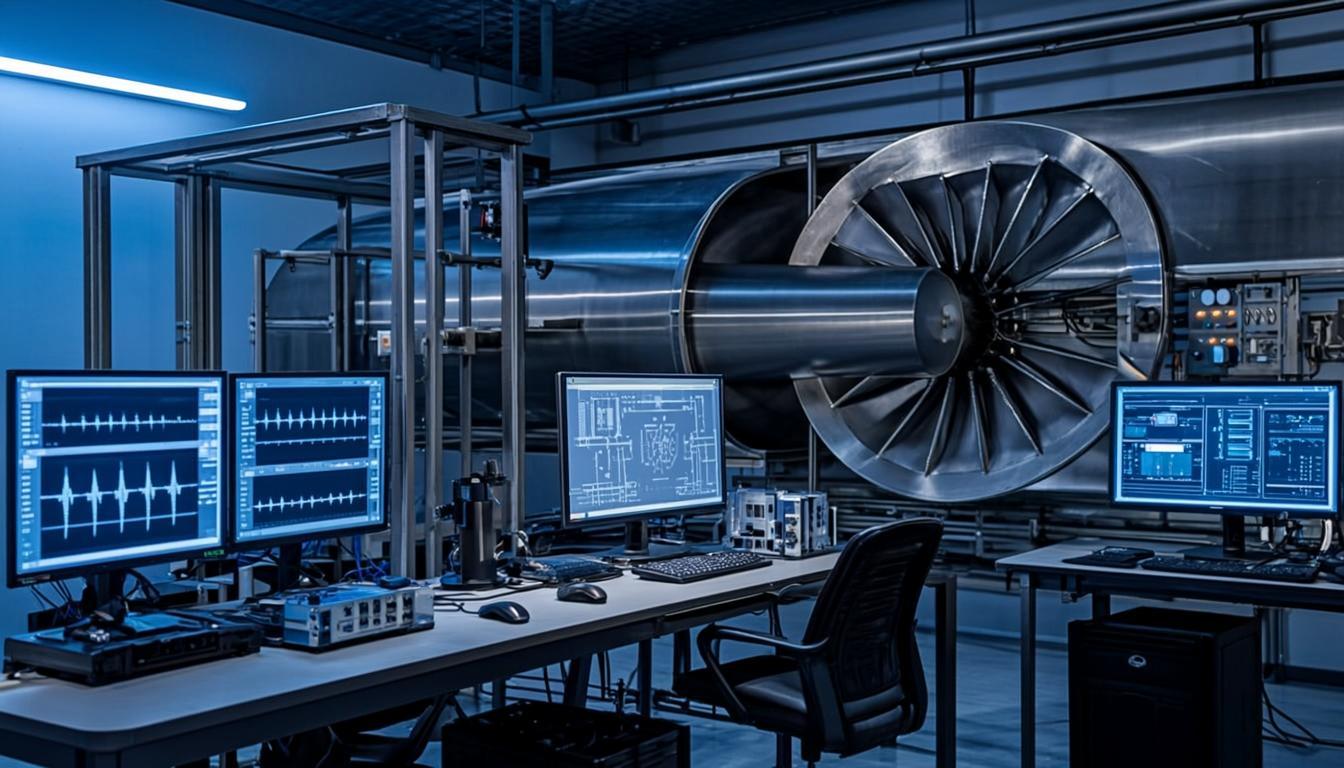
One-Stop Service System
A professional team escorts every step from requirement to delivery
Requirement
Understand application scenarios, cooling targets and structural constraints.
Solution
Recommend standard or custom solutions based on airflow, pressure, noise and size.
Validation
Fast samples and test data; on-site testing and joint tuning supported.
Delivery
Quality-controlled stable delivery with continuous technical support.
Thermal Knowledge Center
Selected cooling know-how for scientific selection
A heat pipe is a highly efficient heat-transfer element using phase change of a working fluid, composed of a shell, wick and working fluid. Heat at the evaporator vaporizes the fluid; the vapor flows to the condenser, releases heat and liquefies; the liquid returns via capillary action of the wick, forming an efficient transfer loop.
Its effective thermal conductivity can be tens of times that of pure copper, serving as the "thermal bridge" in cooling modules to move heat from high-density chips to remote fin areas.
Fan noise mainly comes from blade-tip cutting, bearing friction and turbulent flow. When selecting: prefer low-speed large-size solutions (lower speed = lower noise at equal airflow), wide or multi-blade designs, and high dynamic-balance grades.
At system level: optimize air ducts to reduce turbulence, add anti-vibration pads, and enable PWM temperature control so fans slow down when cool — all significantly lowering overall noise.
The interface material between CPU and heatsink directly affects thermal resistance. Common options: thermal grease (cost-effective, apply evenly and mind aging), phase-change materials, thermal pads (for large tolerances) and indium sheets (ultra-high conductivity for premium scenarios).
Consider thermal conductivity, thickness, compression and maintainability. Replacing aged grease periodically is a simple and effective way to maintain cooling performance.
Limited by internal space, laptops typically combine heat pipes, ultra-slim fans and vapor chambers. Fan selection focuses more on thickness, static pressure and noise than maximum airflow.
Keep vents unobstructed and avoid sustained heavy loads on soft surfaces. If temperatures spike or the fan rattles, clean dust promptly and renew the interface material.
Smart fans combine temperature sensing (NTC or digital sensors) with PWM speed control, adjusting speed to real-time temperature to balance cooling and silence automatically.
Key parameters include start-up voltage, the speed curve (temperature-to-duty mapping), minimum speed and FG/RD feedback signals. A well-designed curve extends fan life and noticeably improves user experience.
Online Message
Leave your requirements and we will reply within one business day